Restaurant & Food-Service Cleaning in the Twin Cities
Dining rooms, service stations, kitchen floors and restrooms cleaned overnight or between services — so the opening crew walks into a room that is ready for an inspector, not one that needs an hour of catch-up.
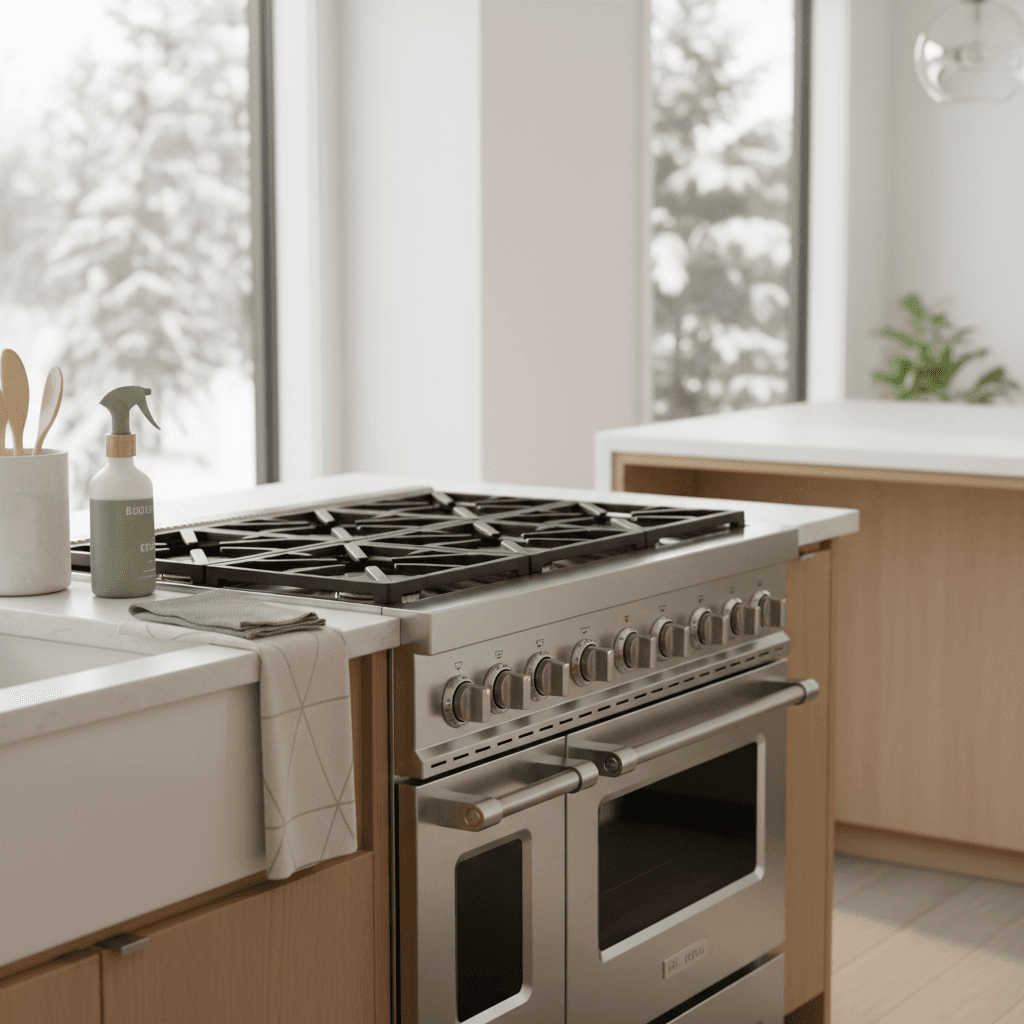
KLY cleans restaurants, cafés and taprooms across the Twin Cities at $55 per hour per cleaner, most often overnight. Scope covers the dining room, service stations, restrooms, and kitchen floors, walls and hard surfaces. Kitchen exhaust hood and duct cleaning is a separate certified trade and is not part of our work.
What owners tell us before they switch
- Kitchen floors that look fine until the drain area and the base of the line tell an inspector otherwise.
- A closing crew doing the cleaning at the end of a fourteen-hour shift, and doing it the way anyone would at 1 AM.
- Booths and banquettes wiped on the seat but never underneath, where crumbs and grease quietly build up.
- Restrooms judged by guests on a Saturday-night standard and cleaned on a Tuesday-afternoon one.
- A vendor who cannot work around a bar close, a delivery window and an alarm code without three phone calls.
Where KLY sits in Minnesota’s food-code picture
Restaurants in this state are inspected against the Minnesota food code in Minnesota Rules chapter 4626, enforced either by the Minnesota Department of Health or by a delegated city health department — Minneapolis and St. Paul each run their own. The code separates food-contact surfaces, which staff clean and sanitize as part of operations, from the non-food-contact surfaces and physical facilities that simply have to be kept clean.
That line decides our scope. Your kitchen team owns food-contact equipment, prep surfaces, slicers and warewashing. KLY owns the physical facility: floors and their drains, walls and splash zones, the back and underside of the line, dining rooms, service stations, restrooms and entryways. Both halves get inspected; only one of them fits inside a closing shift.
Cleanliness is a public-health lever as well as a licensing one. The CDC attributes roughly 58 percent of foodborne illness acquired in the United States to norovirus, which spreads readily on hand-contact surfaces — menus, door handles, restroom fixtures — and not through food alone.
Overnight, pre-open, or between services
Most of our food-service work happens after the last table clears, when a crew can move furniture, get behind the line and mop without dodging service. Cafés that close early often prefer a pre-open visit instead, and larger operations split the difference: a dining-room reset before open, plus a deeper floor and wall night once or twice a week.
Access is settled once and then left alone. We work with an alarm code and a key or lockbox held by named employees, and we schedule around delivery windows so nobody is mopping in front of a walk-in door when the produce arrives.
Eagan and the south metro are where our restaurant work is strongest today, and that is not an accident of marketing — it is where our first food-service clients were and where crews dispatch from most nights. Minneapolis and St. Paul volume has grown outward from there.
What we do not do, and why saying so matters
Kitchen exhaust hoods, ducts and rooftop fans fall under NFPA 96, the standard covering ventilation and fire protection for commercial cooking operations, and they are cleaned by certified hood contractors on a documented interval. KLY does not perform that work and does not sub-contract it under our invoice.
We also do not run stripping or waxing machines, and we do not touch food-contact equipment — slicers, prep surfaces, warewashers — which your staff must clean and sanitize under the food code as part of daily operations.
Naming the boundary is worth more than an all-inclusive promise. An operator who knows precisely which lines belong to KLY, which to the kitchen team and which to the hood vendor is an operator who does not fail an inspection in the seam between two contracts.
What an overnight restaurant visit covers
Dining Room & Bar
- Tables, table bases, chair rails and booth undersides degreased
- Banquettes and seat backs wiped, crumbs cleared from every seam
- Bar die, foot rails and stool bases cleaned and dried
- Windows within reach, entry glass and door frames cleaned
- Floors swept, then mopped edge to edge including under furniture
Kitchen Floors, Walls & Perimeter
- Floors degreased around the base of every piece of equipment
- Floor drains flushed and their covers scrubbed
- Wall splash zones behind the line and dish pit washed down
- Reach-in fronts, handles and door gaskets wiped on the outside
- Shelving legs, casters and equipment exteriors degreased
Restrooms & Entry
- Fixtures, partitions, handles and dispensers disinfected
- Mirrors and stainless polished, dispensers restocked from your stock
- Floors washed behind the toilet and along the base trim
- Entry mats lifted, the floor beneath them cleaned, mats replaced
- Waste emptied and receptacle interiors washed out
Service Stations & Back of House
- Server stations, point-of-sale surfaces and menu holders cleaned
- Beverage station drip trays, counters and dispensers wiped
- Dry-storage and dish-area floors swept and mopped
- Trash and recycling areas washed, bins wiped inside and out
- Office and staff-room surfaces and floors finished
Kitchen team, KLY, or a certified hood vendor?
Who owns which task in a Minnesota restaurant — and the reason behind it
| Task | Who owns it | Why |
|---|---|---|
| Food-contact surfaces and equipment | Your kitchen staff | The food code requires operational cleaning and sanitizing |
| Floors, drains, walls and dining room | KLY | Facility cleaning that does not fit inside a closing shift |
| Restrooms and entry areas | KLY | Guest-facing surfaces judged at peak-service standard |
| Exhaust hoods, ducts and fans | A certified hood contractor | Governed by NFPA 96 on a documented interval |
| Floor stripping and waxing | A flooring contractor | Needs machines and coatings KLY does not carry |
Swipe the table sideways to see every column.
Why commercial clients choose KLY
- Overnight is our normal shift. Food-service crews are staffed for after-close work rather than squeezed onto the end of a daytime route.
- The parts an inspector checks first. We work the base of the equipment, the drains and the wall splash, not only the surfaces at eye level.
- Honest scope. Hood cleaning, floor coatings and food-contact equipment are named as somebody else’s job before you sign anything.
- South-metro roots. Eagan and its neighbours were our first food-service market and still get our fastest response times.
- The same $55 rate at 2 AM. No overnight multiplier, no weekend surcharge and no minimum square footage anywhere in the metro.
Restaurants we clean, city by city
Eagan and the south metro are our strongest food-service market — Cedar Grove, Pilot Knob and the Cliff Road corridor — with Burnsville and Bloomington inside the same dispatch. Minneapolis and St. Paul carry the rest of the volume, from North Loop dining rooms to Grand Avenue cafés and West Seventh taprooms, and Edina, Woodbury, Eden Prairie, Maple Grove and Plymouth round out the suburbs.
Restaurant & Food-Service Cleaning — common questions
Do you clean restaurants overnight?
Yes, and it is how most food-service clients book us. A crew arrives after the last table clears, works with your alarm code, and finishes before the opening shift walks in. Pre-open visits suit cafés that close early.
Is kitchen hood cleaning included?
No. Exhaust hoods, ducts and rooftop fans fall under NFPA 96 and are cleaned by certified hood contractors on a documented schedule. Our crews clean the kitchen floors, drains, walls and equipment exteriors around that work.
How much does restaurant cleaning cost in Eagan or Minneapolis?
$55 per hour per cleaner, with no overnight or weekend premium. A 60-seat dining room with one pair of restrooms and a standard kitchen footprint typically runs two cleaners for three hours per visit.
Do you clean food-contact surfaces?
No. Under the Minnesota food code your staff cleans and sanitizes food-contact equipment and prep surfaces as part of operations. We take the physical facility: floors, drains, walls, dining areas, restrooms and equipment exteriors.
How often should a restaurant book cleaning?
Busy full-service kitchens usually run five to seven nights a week on floors and restrooms, with a longer wall and perimeter night once weekly. Counter-service rooms and cafés are often fine on three visits.
Are you insured for work inside a licensed kitchen?
Yes. KLY carries general liability and workers’ compensation and is bonded, and we issue certificates naming the restaurant and, where a lease demands it, the landlord as additional insured before the first shift.